Absolute, Concrete, CO2 Extract, Renewable Solvent: A Perfumer's Glossary of Natural Extraction
Absolute, concrete, CO2 extract, renewable solvent: perfumers use these words constantly, but each marks a distinct point in an extraction process. A working glossary from LOSiam's Chiang Mai lab, illustrated with real ingredients from Tobacco to Teak.
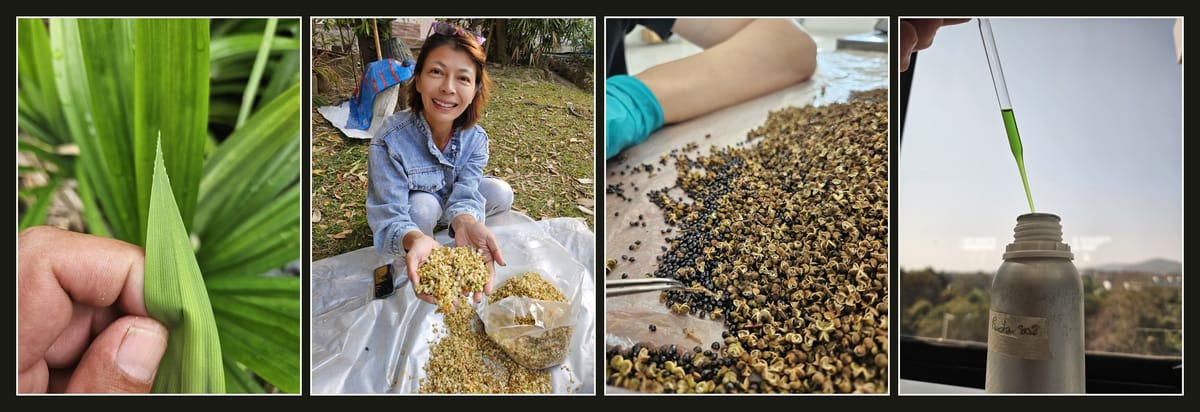
Perfumers move between these words constantly: absolute, concrete, CO2 extract, solventless or renewable solvent. In casual use they often get treated as interchangeable, and on some spec sheets they practically are. But each term describes a specific point in an extraction process, with its own chemistry, and knowing the difference tells you something real about how an ingredient was made, what's still in the bottle, and how it will behave in a formula.
This glossary walks through the vocabulary the way we use it in our own lab at CMU Biopolis, Chiang Mai, with the mechanism explained alongside real ingredients from our own range rather than generic illustrations. It's meant to be a reference you can come back to, not a one-time read.
Concrete
A concrete is the first solid extract obtained when a raw botanical material, flowers, bark, wood, leaves, is macerated or percolated with a non-polar solvent, traditionally food-grade hexane (polarity index ≈ 0.1). Because hexane sits at the non-polar end of the solvent scale, it doesn't stop at the volatile aromatic fraction: it also dissolves the plant's waxes, pigments (chlorophylls, carotenoids), and heavier lipids, molecules close enough in polarity to the fragrance compounds that a non-polar solvent has no way to separate them at this stage. Once the hexane is stripped off, typically under reduced pressure to limit heat exposure and protect the most volatile top notes, what's left is a waxy, often dark, semi-solid mass: highly concentrated in scent, but still carrying the raw material's full fatty and pigment load.
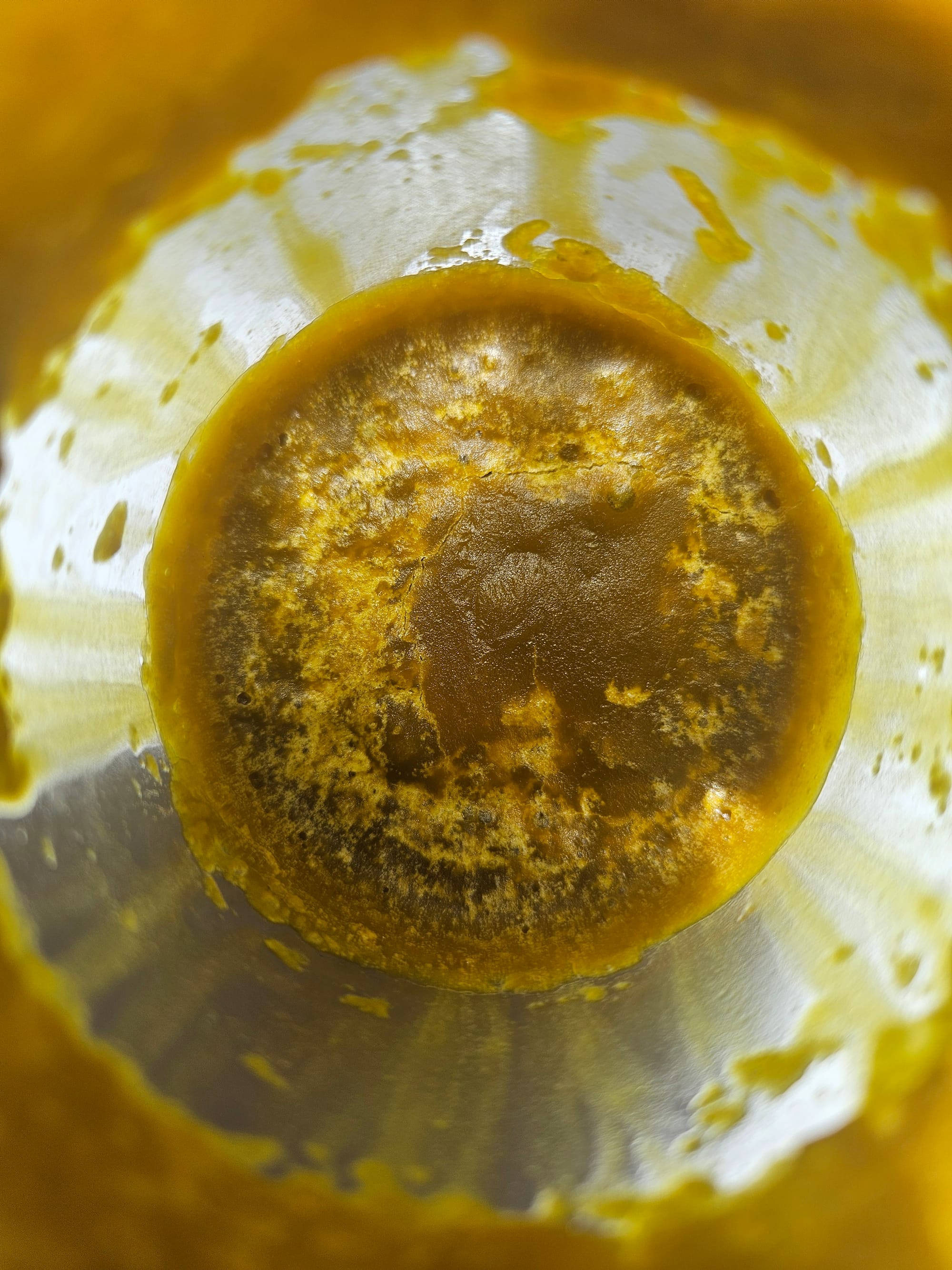
A concrete is rarely used as-is in fine fragrance. It's an intermediate, valued mostly as the raw material for the next stage: the absolute.
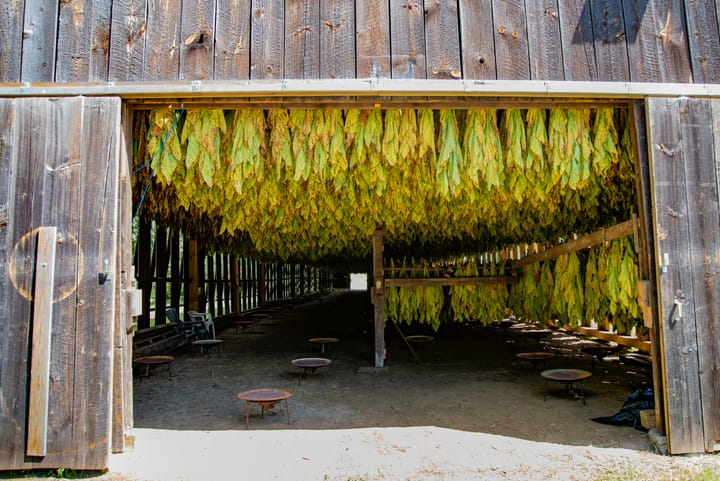
In our own process for Golden Virginia Tobacco Absolute, the leaf is hand-stripped, shredded to increase surface area (and therefore solvent contact and extraction yield), and macerated in solvent. What comes out at that stage is exactly this: a dark, waxy concrete still carrying the leaf's raw wax load, described step by step in our tobacco extraction walkthrough. The same non-polar maceration produces the concrete behind our Jungle Pepper (Zanthoxylum rhetsa) and Roasted Coconut absolutes: the dried, spicy pericarp of jungle pepper and the roasted, lipid-rich coconut flesh both yield a concrete heavily loaded with the raw material's own oils, before the ethanol wash strips the waxy fraction away. We compare jungle pepper's extraction to the more common Sichuan pepper route in a dedicated article, and we walk through how we work around coconut's dense lipid load in Unlocking a Roasted Coconut Absolute: Battling the Lipid Barrier.
Absolute
An absolute is what you get after washing a concrete with ethanol, a far more polar solvent (polarity index ≈ 5.2, against hexane's ≈ 0.1), to separate the aromatic material from the waxes. Ethanol dissolves the fragrant compounds readily while the long-chain wax esters and pigments stay largely undissolved. Chilling the ethanol solution pushes any wax that did dissolve back out of solution, where it can be filtered off; once the ethanol itself is evaporated away, typically under vacuum to keep the process gentle, what remains is a much more mobile, intensely aromatic liquid, the absolute. It's this fraction that perfumers actually work with on a blotter.
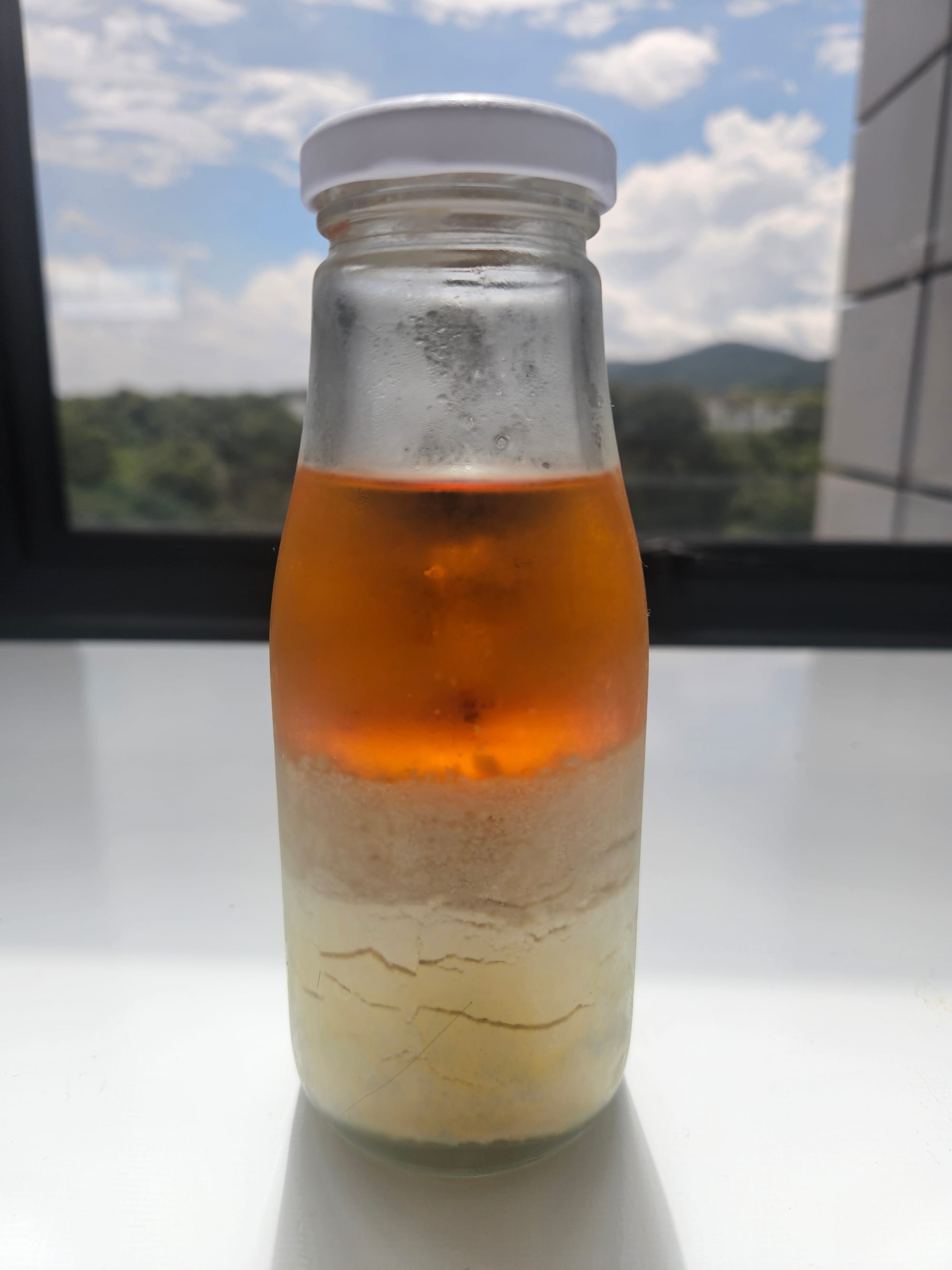
Absolutes are prized because they capture a fuller, truer olfactory picture of a raw material than steam distillation typically can. Distillation depends on heat and on how readily each compound co-volatilizes with steam, so delicate, heat-sensitive notes, and the heavier molecules too high-boiling to distil efficiently, are the ones most often lost or altered along the way. A room-temperature solvent route sidesteps that thermal bottleneck and pulls through a wider molecular range. The trade-off is that a trace of residual solvent can remain unless the extraction and washing are done carefully, which is why solvent choice and process control matter as much as the raw material itself.
Our Rare Saraphi Absolute (Mammea siamensis) follows exactly this concrete-to-absolute path, extracted from fresh flowers harvested on the Chiang Mai University campus, one of the only sources of this material anywhere, since no commercial Saraphi plantations exist. The full story, including how we mapped and secured access to the trees, is in our Rare Saraphi Absolute article. Our Miang Absolute, made from fermented Assam tea leaf (Camellia sinensis var. assamica) traditionally chewed across Northern Thai and Shan communities, follows the same route: a concrete first, then an ethanol wash to isolate the fermented, animalic-tobacco character from the leaf's residual wax. We cover the fermentation and the extraction side by side in our Miang article.
CO2 Extract
A CO2 extract uses carbon dioxide, held under pressure at or near its supercritical point (31.1°C and 73.8 bar, conditions well within reach of standard extraction equipment), as the extraction medium instead of a liquid solvent like hexane or ethanol. Past that point, CO2 no longer behaves as a distinct gas or liquid: it takes on a density close to a liquid's, giving it real solvating power, while keeping a gas-like viscosity and diffusivity that let it penetrate plant material efficiently. Because its solvating power tracks its density, an operator can tune how broad or narrow a range of compounds it pulls out simply by adjusting pressure and temperature: closer to the critical point for a lighter, more volatile-focused cut, or further into the supercritical range for a broader extraction closer to a full solvent profile.
The defining advantage is what happens afterward. Once the pressure is released, the CO2 reverts to gas at ambient conditions and disperses entirely, leaving behind an extract with no solvent residue to wash out or worry about. There is no concrete-to-absolute step, because there's no solvent trapped in the material to begin with, which is part of why the technique has become popular for materials where perfumers want the fullest possible olfactory profile of the source, not a fractionated or reconstructed version of it.
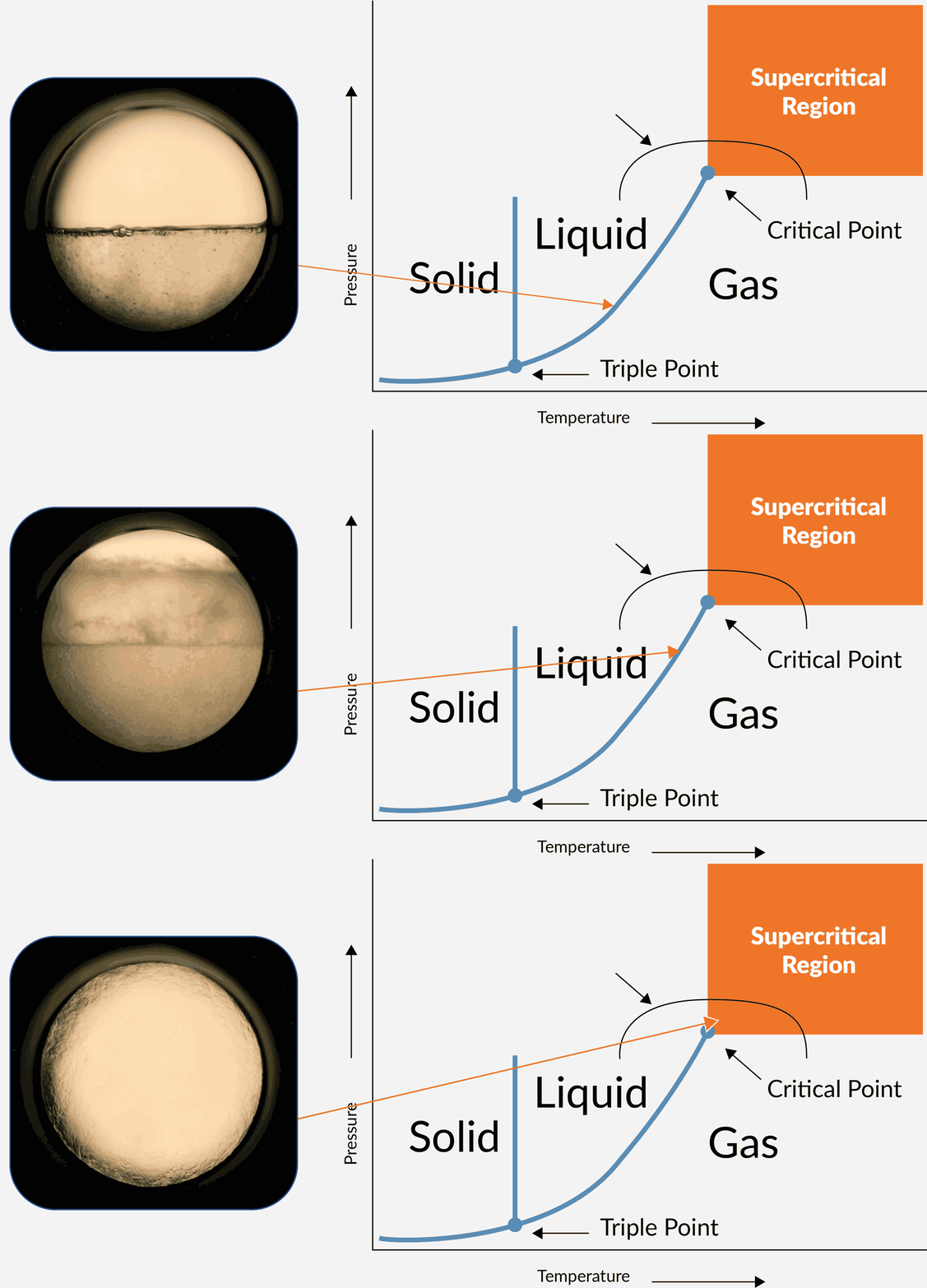
CO2 phase diagram: above its critical point (31.1°C, 73.8 bar), CO2 enters the supercritical region shown in the upper right. Source: Core Separations.
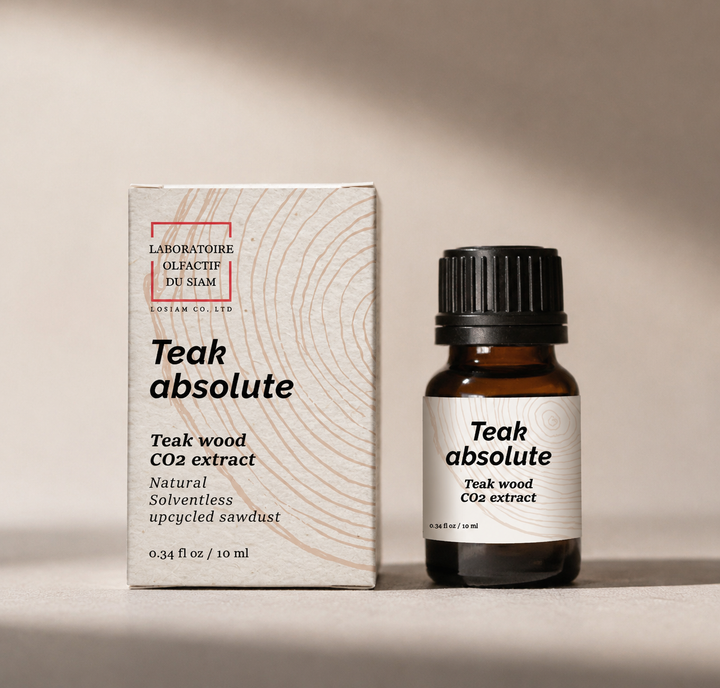
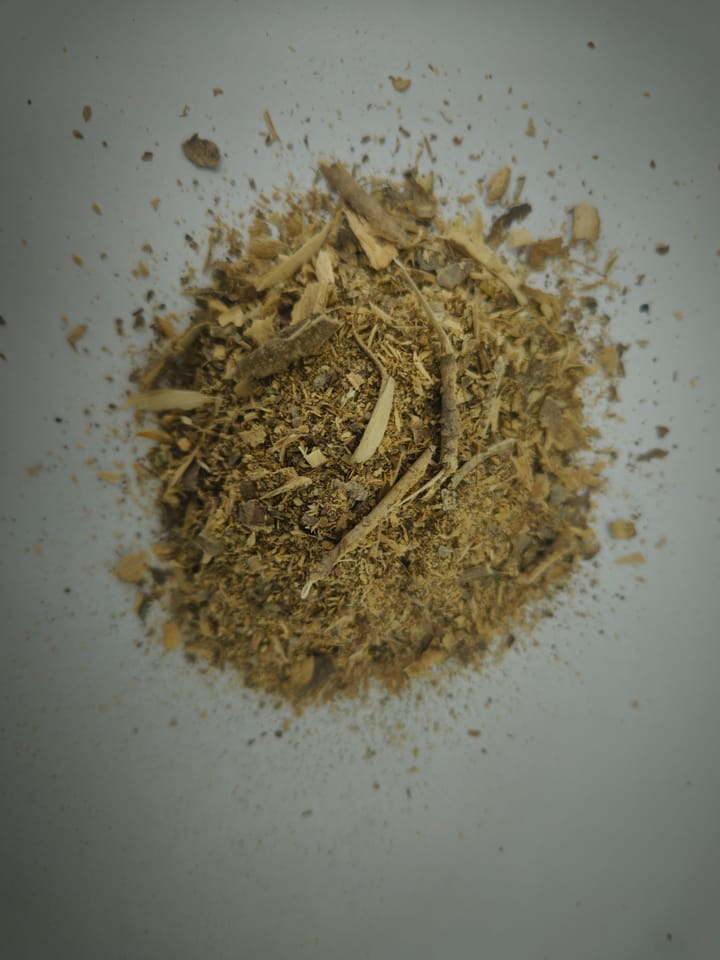
This is the method behind our Teak Wood CO2 Extract, developed with CMU Biopolis and supported through Thailand's DIPROM bio-industrial development program. We extract it from upcycled sawmill sawdust rather than freshly felled wood: a solventless, fully residue-free extract that captures the wood's true olfactory character on the blotter, with no washing or fractionation step to soften or reshape it. The full story is in our Teak Wood CO2 Extract article.
We use the same route for our Coffee Bean Absolute, extracted anaerobically from roasted beans, where lipids and aroma compounds are closely bound at the molecular level and complicate extraction efficiency regardless of method (the details are in Grinding Coffee's Enigmatic Profile: Navigating the Shadows of Anaerobic Fermentation and Omni Roasting), and for our Aromatic Litsea (Litsea cubeba), where the solventless pass captures its citrus-leathery-aromatic profile intact, without a fractionation step that could soften it. CO2's tunable density gives us a way to manage all three extractions more precisely than a fixed-polarity solvent would allow.
Solventless and Renewable Solvent: Not Quite the Same Claim
These two terms get used almost interchangeably across the industry, but worth separating:
Solventless is the more defensible claim, and it's what applies to CO2 extraction. Since CO2 is not a liquid solvent at ambient conditions and evaporates completely once pressure is released, there is no solvent residue to speak of. This is why CO2 extracts, like our Teak Wood CO2 Extract above, are frequently marketed as solventless, and it's an accurate use of the word.
Renewable solvent, in our own labeling, refers to something slightly different: a direct maceration in renewable, food-grade ethanol, bio-based rather than petroleum-derived, without the classic hexane concrete stage that precedes a traditional absolute. Ethanol is, chemically speaking, still a solvent, and its higher polarity means a maceration in ethanol alone reaches a different, generally narrower slice of a material's chemistry than a non-polar hexane maceration would. What we mean by renewable solvent in this context is the absence of a petroleum-derived, non-renewable solvent anywhere in the process, and the absence of an intermediate wax-laden concrete that then needs a separate washing step. The raw material is macerated directly in ethanol, which draws out its soluble aromatic compounds in a single pass, producing what we classify as a full botanical extract rather than a fractionated one.
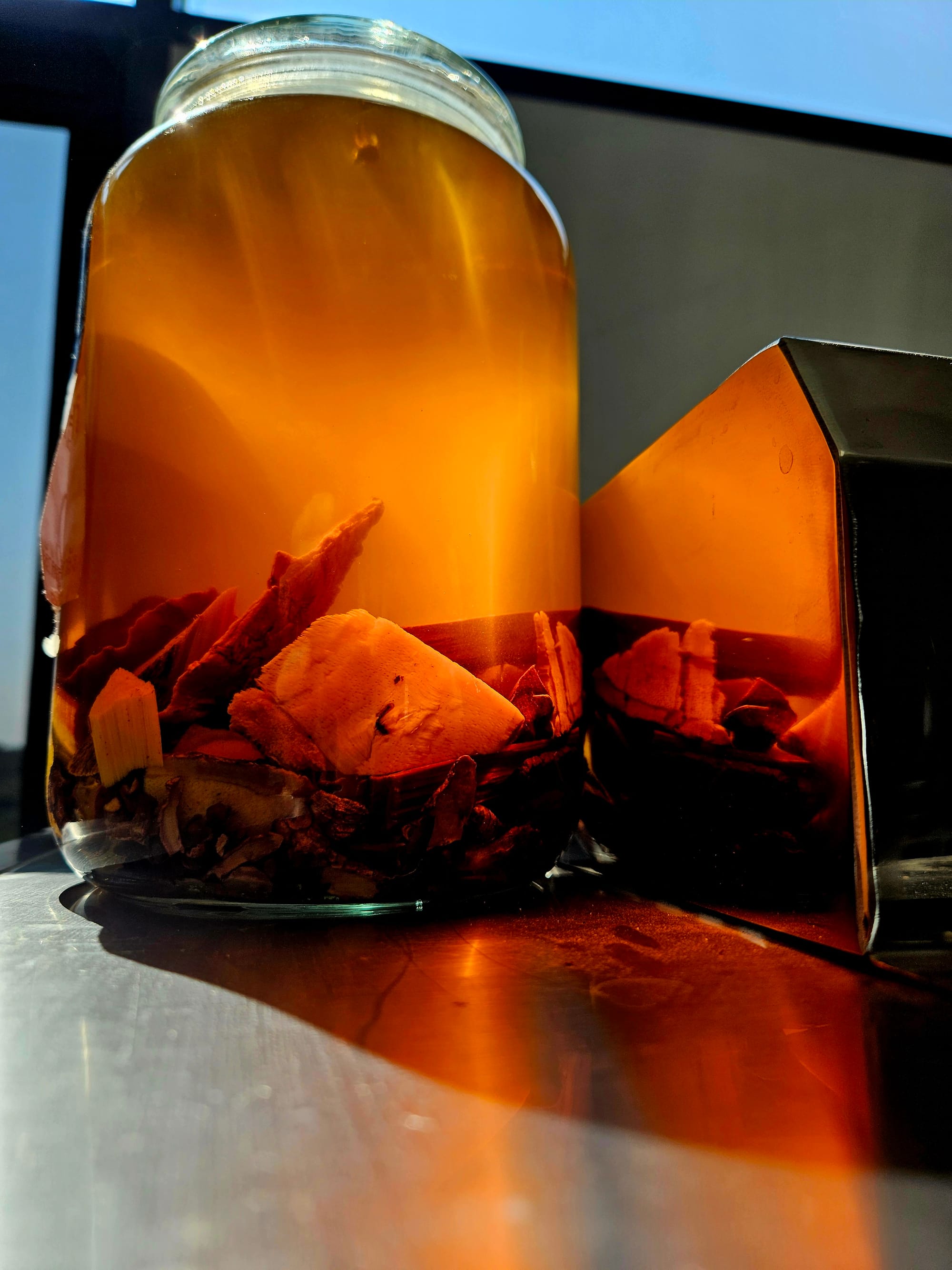
Our Fresh Pandan Leaf Absolute is the clearest example: pandan leaf is macerated directly in renewable ethanol, with no intermediate solvent step, in a process built around preserving 2-acetyl-1-pyrroline (2AP), the aroma compound responsible for pandan's signature rice-like note. 2AP is notably thermolabile and prone to degradation under heat or harsher, more aggressive solvent routes, which is part of why a gentle, single-pass maceration on fresh (not dried) leaf matters for capturing it intact. We describe the process itself in detail in the Fresh Pandan Leaf Absolute article. The same direct-maceration route gives us our Chalood Bark Absolute, from bark long used in Lanna incense and herbal remedies and long sold in local markets as a cinnamon substitute, covered in Chalood (Alyxia reinwardtii): The Bark Sold as Cinnamon, and our Ya Dong Accord, built from the Thai black ginger, bitter resinous bark, and earthy root that go into the traditional roots-and-bark liquor rural households across Thailand still infuse at home. Both go straight from raw material to renewable-ethanol maceration, with no hexane concrete stage in between.
If a spec sheet says solventless, it's worth asking which claim is actually being made. For a genuinely residue-free process, CO2 extraction is the more rigorous answer. For a process free of hexane and petroleum-derived solvents but still using ethanol, renewable solvent is the more precise term, and a reputable supplier should be able to tell you which one applies.
Quick References
| Term | Extraction medium | Intermediate wax-laden stage? | Residue after processing | LOSiam examples |
|---|---|---|---|---|
| Concrete | Hexane or other non-polar solvent (polarity index ≈ 0.1) | This is the intermediate stage | Waxes, pigments retained | Tobacco (pre-wash), Jungle Pepper, Roasted Coconut |
| Absolute | Solvent, then ethanol wash (polarity index ≈ 5.2) | Yes, washed away by chilling and filtration | Minimal, if well processed | Rare Saraphi Absolute, Miang Absolute |
| CO2 extract | Pressurized CO2 (supercritical above 31.1°C / 73.8 bar) | None | None, CO2 fully evaporates | Teak Wood CO2 Extract, Coffee Bean Absolute, Aromatic Litsea |
| Renewable solvent (ethanol maceration) | Bio-based ethanol, direct | None, single-pass | Trace ethanol at most | Fresh Pandan Leaf Absolute, Chalood Bark Absolute, Ya Dong Accord |
Why This Distinction Matters When You're Evaluating a Material
For a perfumer or evaluator, the extraction method isn't a footnote, it shapes what's actually in the bottle. A concrete-derived absolute captures a broad, often deeply characteristic profile of a material, including notes that steam distillation would strip out, but depends on careful washing to avoid carrying over unwanted residue. A CO2 extract tends to read closer to the raw material itself, since nothing has to be washed out afterward, which is part of why it's increasingly requested for naturals where fidelity to the source matters more than tradition of method. A renewable-solvent ethanol extract sits between the two: no hexane, no fractionation, but still technically a solvent-based process, and one whose narrower polarity window makes it particularly suited to fragile, polar aroma molecules like 2AP.
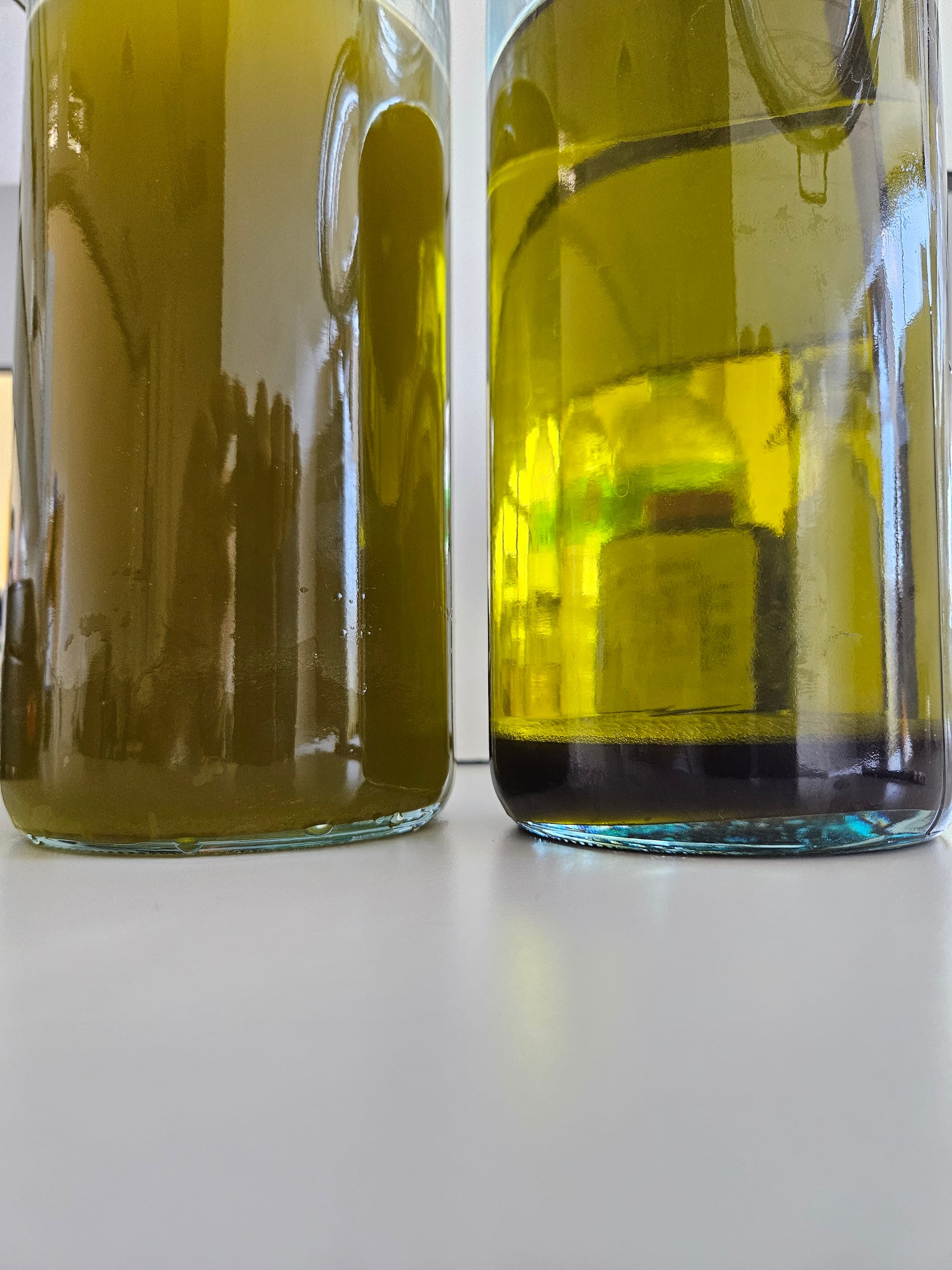
None of these methods is universally "better." The right one depends on the material's chemistry (how heat-sensitive it is, how much wax it carries, how it responds to different solvent polarities) and on what the perfumer is actually trying to capture. Part of our own R&D work at LOSiam is matching the extraction method to the material rather than defaulting to one process across the board.
If you're evaluating one of our materials and want to know exactly which process produced it, and why, reach out. We're happy to walk through the specifics for any ingredient in the catalogue.
Explore our current absolutes and CO2 extracts → See our extraction methods in the lab →
Frequently Asked Questions
Is a CO2 extract the same as an essential oil?
No. Both avoid solvent residue, but for different reasons: an essential oil is produced by steam distillation, which depends on heat and co-volatility with steam. A CO2 extract uses supercritical CO2 as a tunable, liquid-like solvent at low temperature, capturing a broader slice of the material's aromatic chemistry, including heavier, less volatile molecules that steam distillation leaves behind.
Does an absolute contain solvent residue?
An absolute is produced by washing a concrete with ethanol and evaporating it under vacuum, so any residual solvent is ethanol, not hexane, and food-grade ethanol is considered safe at the trace levels involved. The hexane used at the concrete stage is removed earlier and does not carry through into the finished absolute.
What's the difference between renewable solvent and solventless?
Solventless is the more defensible claim, and applies to CO2 extraction: CO2 isn't a liquid solvent at ambient conditions and disperses fully once pressure is released. Renewable solvent describes direct maceration in bio-based ethanol, which is still technically a solvent process, just one that skips the hexane-concrete stage. LOSiam uses the two terms deliberately, not interchangeably.
Why would a perfumer choose a CO2 extract over an absolute?
When fidelity to the raw material matters more than tradition. A CO2 extract needs no washing step to separate waxes from aromatics, so it stays closer to the material's native chemistry. An absolute goes through an extra ethanol-wash stage, which is well suited to fragile, heat-sensitive materials but introduces its own processing choices along the way.
Comments ()